
What To Do on a College Visit
You can learn a lot about a college without ever setting foot on campus. You can explore
majors, compare costs, scroll through photos, and read about student life. But some of the most
important parts of choosing a college are harder to see on a screen.
What does a classroom actually feel like? Do students seem at home here? Can you picture yourself having lunch, meeting a professor, joining an organization, or walking across campus every day?
That is where a college visit can make a difference. A college visit gives you the chance to explore academics, meet students and professors, experience campus life, ask questions, and begin to picture what your own college experience could look like.
For Sarah Baquedano Zavala, a senior pre-med student and Student Ambassador at Centenary, that discovery happened during Scholars Weekend.
“Throughout the application process for other colleges, it felt as though I needed to prove
why they should have chosen me,” Sarah said. “However, with Centenary, I never felt like I needed
to prove that I belonged.”
A college visit can give you information. But if you pay attention to people, conversations,
and ordinary moments along the way, it can also help you discover what matters to you.
Explore Academics on a College Visit
Reading about class sizes and academic programs can tell you what you might study. A
college visit gives you a chance to think about how you want to learn.
As you move through campus, pay attention to the academic environment around you. How
do students interact with their professors? Are students comfortable asking questions? Do the
people you meet seem to know one another?
A college visit can also be an opportunity to see academic spaces in person, observe a class,
or speak with a professor in an area you are considering. These experiences can help you move
beyond a list of majors and begin thinking about what kind of learning environment you want.
For Sarah, relationships with professors became one of the things that stood out after
becoming a student.
“It surprised me how close a relationship students develop with their professors,” she said.
“The professors really do want the best for you as a person, and it’s awesome to see how much
they support us.”
Use your college visit to ask yourself what kind of relationships with professors and what
kind of classroom environment you want throughout your college experience.
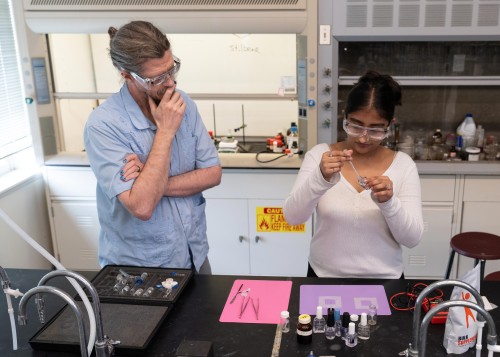
A Centenary professor works closely with a student during a hands-on laboratory experience.
Meet the People Behind the College on a College Visit
Before a college visit, a school can feel abstract.
Then you meet the people.
Sarah remembers how welcoming Centenary’s staff, faculty, and students were during her
first visit. She was hosted by a student who would eventually become both her friend and her sister
in Greek life.
Now, as a Student Ambassador herself, Sarah helps prospective students experience those
same interactions when they visit Centenary.
Those moments may seem small, but they can tell you something a statistic cannot.
During your college visit, notice who speaks to whom. Talk with your Student
Ambassador. Ask students what they do when they are not in class. Pay attention to whether you
feel comfortable asking questions.
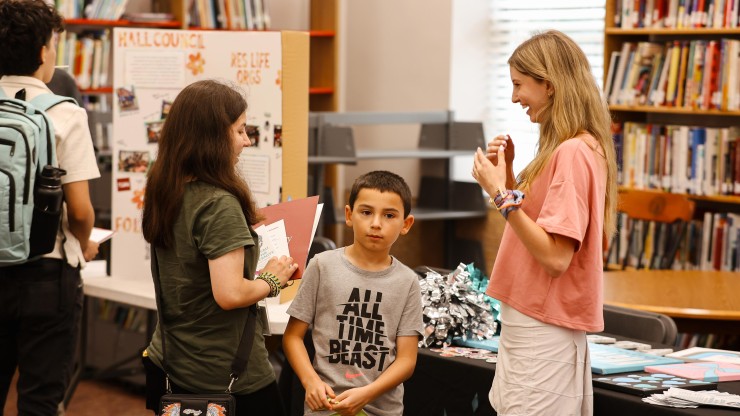
Two Centenary students share a welcoming moment on campus.
The people you meet during a college visit may help you imagine the people who could
eventually become your professors, mentors, teammates, classmates, and friends.
Experience Everyday College Life on a College Visit
During a college visit, do not just imagine move-in day. Imagine an ordinary Tuesday.
Where would you go between classes? Where would you study? What would you do after
your last class? Who might you spend your evenings with?
Centenary students spend time together and enjoy the sense of community found across
campus.
For Baleigh Hardman, who studies biology and neuroscience with a minor in sociology,
much of an ordinary day is spent in Mickle Hall or the library. The Learning Commons is a place
where studying and community overlap.
“It is such a welcoming atmosphere for studying and having open conversations with other
students about classes or events going on on campus,” she said.
Between classes, she might head to the SUB or the second floor of the library. When she
wants a break, one of her favorite places is the swing between the Fitness Center and Mickle Hall,
where she can sit outside surrounded by campus wildlife.
Josh Mensah’s ordinary day looks a little different.
After breakfast in the caf, Josh heads to morning classes. Between classes, he often visits
friends or stops by the Gold Dome to see trainers and coaches. After his last class, he might study
or head to a friend’s room to relax and play FIFA before soccer practice in the evening.
His favorite place on campus is the Gold Dome for a simple reason: “I get to visit all my
friends and coaches.”
Josh met some of his closest friends through soccer, while Baleigh formed close friendships
through upper-level classes and her Centenary in Paris experience.
Those connections are one part of student life Josh thinks prospective students might not
fully see on a college visit: “The friendships and connections you make in clubs, sports, and
organizations.”
Asked what feels different about Centenary now compared with what he imagined before
enrolling, his answer was simple:
“It feels more like a community.”
That is why a college visit is about more than seeing where you might live and learn. Try
to picture what happens between the scheduled moments, too.
Notice where students gather. Look at the places where they study, eat, relax, and talk.
Those ordinary spaces may help you understand what your own everyday college life could look
like.
Discover New Opportunities on a College Visit
You probably already have a list of things you want from college. Maybe it includes a
particular major, an internship, research, travel, sports, or an extracurricular activity.
But a college visit can also introduce you to opportunities you do not know to ask about
yet.
Sofia Poliakova found some of hers after arriving at Centenary. One of the biggest was the
opportunity to return to the stage and perform. She also connected with organizations including
the International Students Organization (ISA), Christiana Leadership Center (CLC), Student
Government Association (SGA), and Film Society.
She found many of those opportunities by doing something simple: talking to people.
“If I see some of the people I know doing something cool, I usually just ask where they
started and if there’s a chance for me to participate too,” Sofia said.
Advisors, professors, and other students also helped her find ways to pursue her interests.
“My advisors are my mentors,” Sofia said, describing how people at Centenary have been
willing to connect her with others who could help her become involved.
Those experiences have taught her something beyond how to find an organization or
activity.
“I learned how important it is to serve others and that if you want to feel included, you have
to include and see others as well,” she said.
So, during your college visit, ask about the opportunities you already know you want, but
leave room for the ones you have not imagined yet.
Ask students what they discovered after enrolling. Ask how they found the organizations,
performances, research, internships, community experiences, or other opportunities that became
important to them.
Sometimes discovery starts with a simple question: Can I be part of this too?
Student explores campus organizations, resources, and opportunities during Start Strong, a
Centenary event for first-year students.
Discover What Matters to You on a College Visit
A college visit does not only teach you about a college. It can teach you what you are
looking for in one.
Before Alisha Green began visiting colleges, one thing was clear: she wanted an
environment where she would feel comfortable.
“The idea of classrooms with 200+ people scared me, and I knew that wasn’t something I
wanted to settle for in searching for a college,” Alisha said.
Centenary was her first real college visit. Afterward, she realized that a smaller campus
and close relationships with professors were things she wanted from her college experience. She
also became interested in opportunities to travel and learn from different parts of the world and in
the variety of knowledge offered through a liberal arts education.
But visiting and eventually attending college also changed some of the things she thought
would matter.
Before college, Alisha imagined that “going out” every weekend would be an important
part of her experience. At Centenary, she realized she valued something much simpler: spending
time with friends in the residence halls or around campus.
And there was a particular moment when she could picture herself becoming a Centenary
student.
“The moment I could picture myself as a Centenary student was after meeting my coach
and auditioning for the choir,” Alisha said. “The school was offering me two things that I love
dearly, and that wasn’t an opportunity I could pass up.”
The Centenary Choir performs together, highlighting one of the many ways students can get
involved on campus.
Her advice to students touring several colleges is to embrace the experience, take notes
about what they like and do not like, and talk with the students who attend each school.
A college visit is not only about comparing colleges. Along the way, you may discover that
your own definition of the college experience you want begins to change.
Explore Centenary Through a Virtual College Visit
If you cannot make it to campus yet, a virtual college visit can be a useful first step.
A virtual college visit gives you the opportunity to learn more about Centenary from
wherever you are, ask questions, and begin identifying what you want to explore during a future
in-person college visit.
Centenary offers virtual visits for prospective students who cannot make it to campus.
During a virtual visit, students can meet one-on-one with an admission counselor for an admission
and financial aid overview. Arrangements can also be made to connect virtually with a Student
Ambassador or faculty member.
To set up a virtual college visit, email admission@centenary.edu. You can include your
name, your preferred date and time, and any particular questions or interests you would like to
discuss during your visit.
Use your virtual college visit to begin building a list of questions. Ask about academics,
financial aid, student organizations, residence life, campus traditions, or anything else that matters
to your college search.
Then, if you later visit Centenary in person, return to those questions and compare what
you learned online with what you experience on campus.
A virtual college visit can help you begin your research, while an in-person college visit
gives you the opportunity to experience the people, spaces, and everyday moments that can be
harder to understand through a screen.
How to Schedule a College Visit
Once you are ready to experience Centenary for yourself, the next step is getting your
college visit on the calendar.
Prospective students can schedule an individual college visit that includes a one-on-one
admission and scholarship information session with an admission counselor and a campus tour
with a Student Ambassador. Depending on availability, students can also request additional
experiences such as meeting with a professor, observing a class, or eating lunch on campus.
Before scheduling your college visit, think about what you most want to learn. Are you
interested in a particular major? Do you want to meet a professor? Are you curious about student
organizations, athletics, residence life, or another part of campus?
Sharing those interests when planning your college visit can help you make the most of
your time at Centenary.
Come ready to ask questions, talk with the people you meet, and pay attention to how you
feel as you move through campus.
Ready to experience Centenary for yourself?
Schedule a College Visit at Centenary
Students with their family during SOAR week.