
Grammy winner AJ Haynes ’11 reflects on art, service, and community
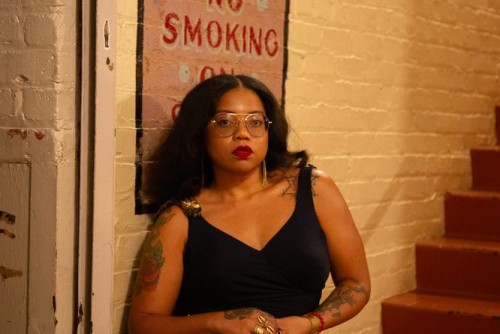
By Edith Zavala Baquedero
When Grammy-winning artist AJ Haynes ’11 returned to her hometown in September, Centenary students caught up with the famed alumna to talk about art, community, and how her years on campus shaped her path.
Haynes was in Shreveport to perform Sept. 18 at the historic Shreveport Municipal Auditorium as part of Louisiana’s Gift to America: A Musical Legacy, an evening celebrating the state’s musical traditions and the artists who carry them forward. She shared the bill with the Dr. Michael White Quartet and BeauSoleil avec Michael Doucet, with conversations hosted by New Orleans author and folklorist Ben Sandmel.
The performance followed a milestone earlier this year. Haynes contributed to “A Tribute to the King of Zydeco,” which won Best Regional Roots Music Album at the 68th Annual Grammy Awards. She was recognized for her work on the track “Why Did You Go Last Night?”
A hometown stage
“Coming home to Shreveport is both beautiful and also always challenging,” Haynes told students, reflecting on the city’s history and her ongoing ties to family and community.
Performing at the Municipal Auditorium carried special meaning for her because of the venue’s history and the chance to celebrate Louisiana culture while highlighting the importance of supporting working artists.
“I’ve always felt taken care of by my community,” she said. “But I also feel like my role as an artist is to be of service.”
Throughout the evening, Haynes explored themes of identity, healing and collective responsibility. Before reciting her poem “Evidence,” she thanked the audience for being present and engaging with difficult subjects.
“That’s how you grow, and that’s how you adapt to become better humans,” she told the crowd.
She also introduced “Milagrosa Creación,” a song she wrote with a friend from Panama. Reflecting on her identity as the daughter of an immigrant, she shared her hope for a future in which migrant children can grow up without fear.
Rooted at Centenary
Haynes traces her commitment to community and creative exploration to her years at Centenary.
As an English major, she balanced a full course load with several jobs, working as a tutor, student worker, performer and patient advocate. Through it all, she said, her professors were a steady source of encouragement.
“I had really great relationships with all of my professors,” Haynes said, crediting their understanding and flexibility as she supported herself while earning her degree.
Though she was not an art major, Haynes found a creative home at the Turner Art Center, where Bruce Allen, now a retired professor of art, supported her efforts to organize an experimental art exhibition.
“I feel thankful that my professors did take risks,” she said, recalling how faculty trusted her to pursue projects that invited the surrounding community onto campus.
Her work beyond the classroom shaped her as well. As a patient advocate at Hope Medical Group, Haynes listened to people facing difficult circumstances and connected them with resources. She credits the experience with strengthening her lifelong commitment to human rights and reproductive justice, and with shaping the sense of community responsibility that informs her creative practice today.
Redefining success
As lead vocalist of Seratones, Haynes has performed across the country and around the world. Her artistic practice has since expanded to include visual art, immersive installations, and arts and wellness initiatives.
Along the way, her idea of success has changed.
“When I first started the band, to me success was being able to travel the world with my friends and doing what I wanted to do,” she told students.
Today, she places greater value on her health, her relationships and the chance to create meaningful work.
“My definition of success is being able to focus on my health and well-being while creating things that I care about,” she said.
Know your why
For Centenary students hoping to build careers in music, art or other creative fields, Haynes offers advice rooted in purpose, especially when navigating opportunity, rejection and uncertainty.
“If you know your why and you know for whom you’re doing this work, then you can navigate uncertainty, you can navigate abundance, you can navigate challenges with more clarity,” she said.
It’s a philosophy that has guided her from Centenary’s campus to international stages and a Grammy-winning recording, and one she sums up simply: “Know your why and know for whom you’re doing it.”
— Photo by Nehemiah Brown