Biology Degree
Centenary’s biology program offers both a Bachelor of Arts and a Bachelor of Science degree and provides a broad background for both the future biologist and the non-science student.
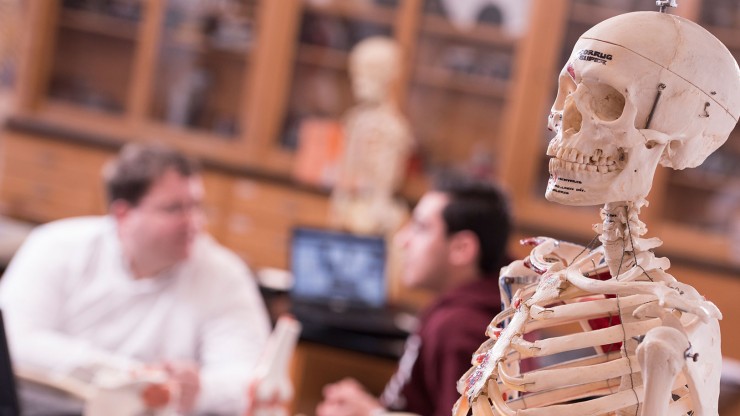
Biology strives to challenge the intellectual curiosity of students by emphasizing the complexity and interrelatedness of life systems as revealed through the unifying law of evolution. Classroom and laboratory experiences are complemented by off-campus opportunities designed to prepare students for professional and graduate programs. The biology curriculum is the appropriate choice in preparation for numerous professions related to the life sciences. The biology curriculum provides excellent preparation for many professions related to the life sciences, including medicine, dentistry, and allied health fields. Classroom and laboratory experiences are complemented by off-campus research and internship opportunities designed to prepare students for professional and graduate programs.
The biology department also offers degrees in biochemistry and neuroscience.
Centenary’s biology program offers both a Bachelor of Arts and a Bachelor of Science degree and provides a broad background for both the future biologist and the non-science student.
Some featured courses include Biology 101: Principles and Methods of Biology, Cell Biology, Human Anatomy and Physiology, Genetics, and Developmental Biology.
Involving post-secondary education:
Without post-secondary education:
Centenary is proud to partner with many graduate and professional programs that create a direct pathway for eligible students.
Centenary is known for its outstanding faculty. The Biology department is home to some of the best!
A biology degree from Centenary is the first step that can lead to many other opportunities and programs such as Physical Therapy, Physician Assistant, Occupational Therapy and many more!
1. 32 credit hours in biology including BIOL 101, BIOL 202, and BIOL 204. At least 20 hours must be 300-level or above. No more than 8 hours of the 32 may be from Independent Study or Internship.
2. Supportive courses:
1. 30 credit hours in biology including BIOL 101, BIOL 202, and BIOL 204. At least 16 hours must be at 300-level or above. No more than 8 hours of the thirty may be from Independent Study or Internship.
2. Supportive courses:
Students electing to minor in biology must take at least 20 hours of biology, including BIOL 101, BIOL 202, and BIOL 204, and at least 6 hours at the 300-level or above.
Scott Chirhart
Dean of Health Sciences, Warters Chair of Biology Department, Associate Professor of Biology
Mickle Hall, 213
© 2026 Centenary College of Louisiana