
PSC/REL 395: Secularism (CRN 2032)
Kellan Klaus • MON/WED 2:30-3:45 pm • Smith 108
The political doctrine of secularism is classically understood as the institutional separation of religion from the governing apparatus of the modern nation-state. Ironically, this constituting principle of secular states requires state intervention in the religious lives of its body politic. This course explores how secular power regulates the boundary between private religion and public political life through ethnographic and historical studies of colonial governance, state law, and US empire. Topics include tolerance and British colonial law in the Indian subcontinent, minority rights of Coptic Christians and family law in Egypt, reconfigurations of French republicanism and Islamic life by “Muslim French” in secular France, and the efforts of transnational Islamist foreign fighters to transcend racial and cultural differences amid the “Global War on Terror.”
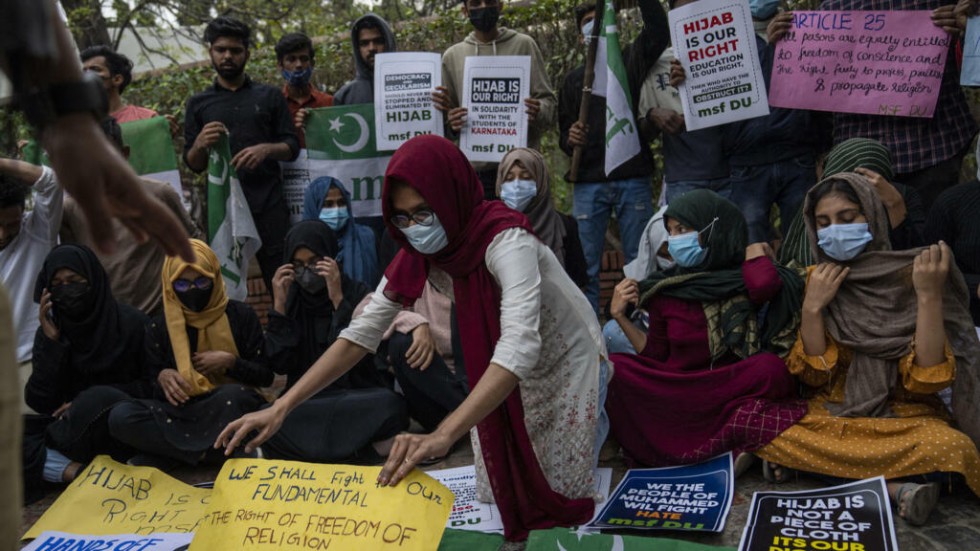
Photo credit: Feb 8, 2022 Associate Press, photo by journalist Altaf Qadri